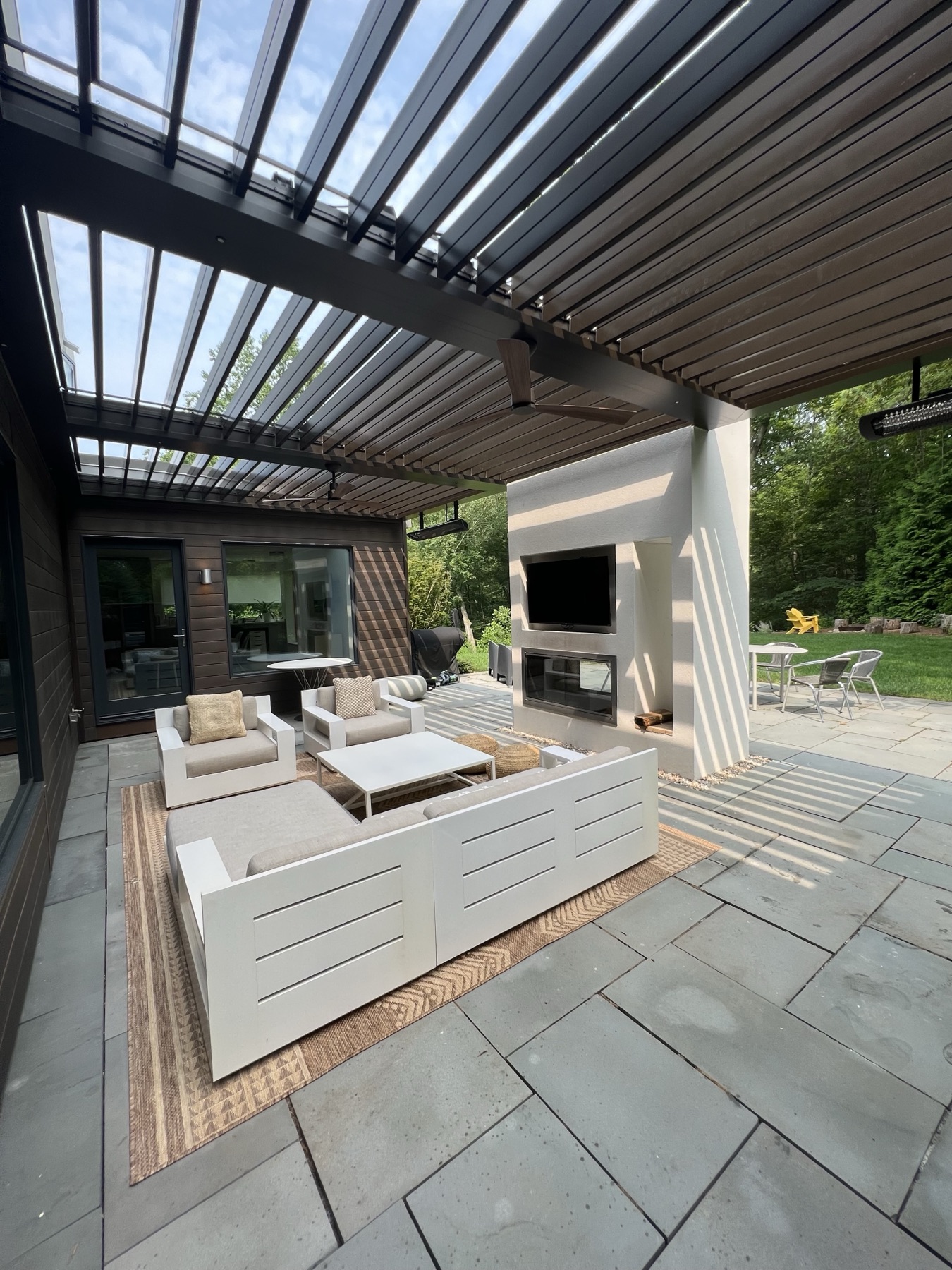
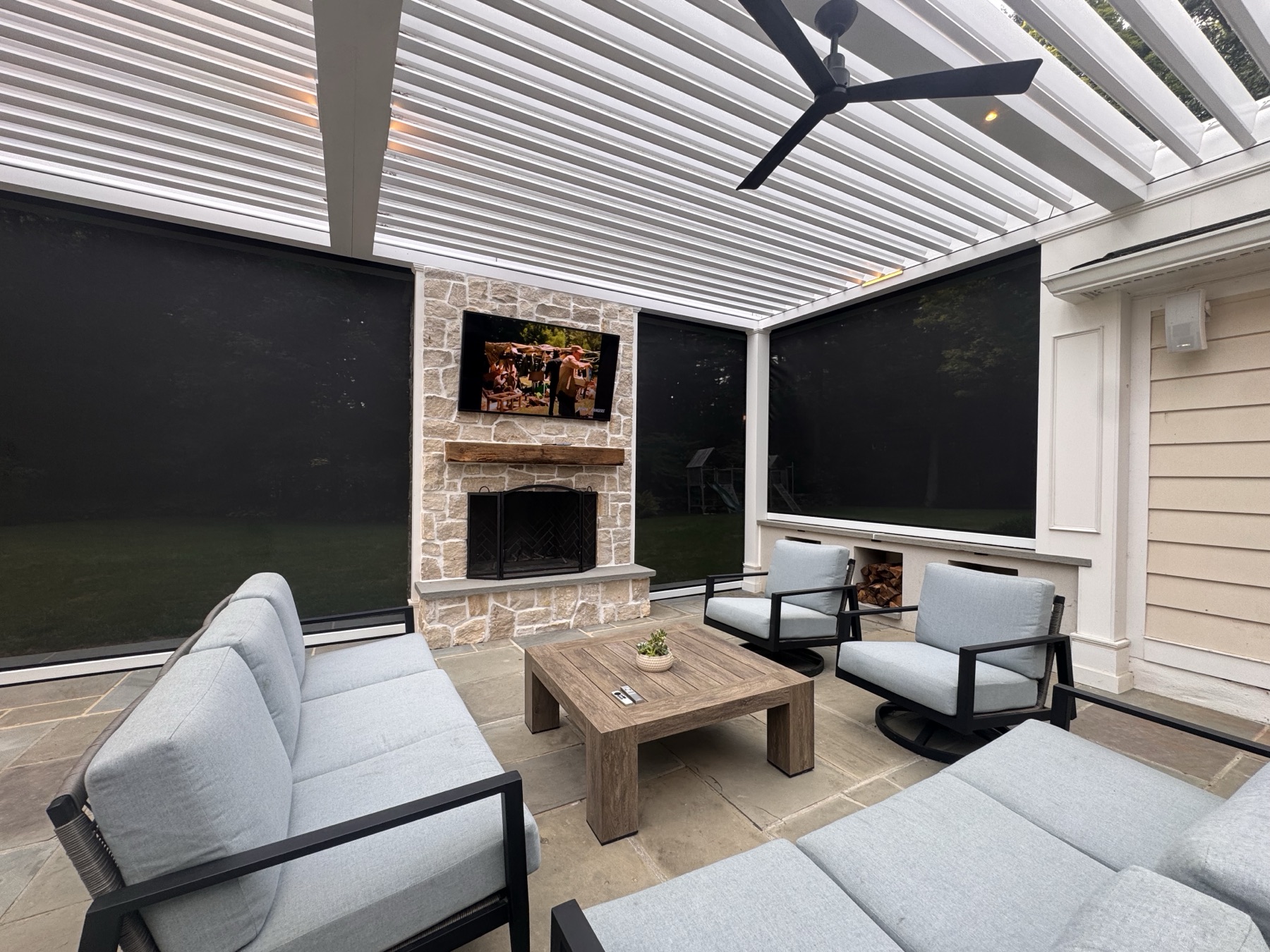
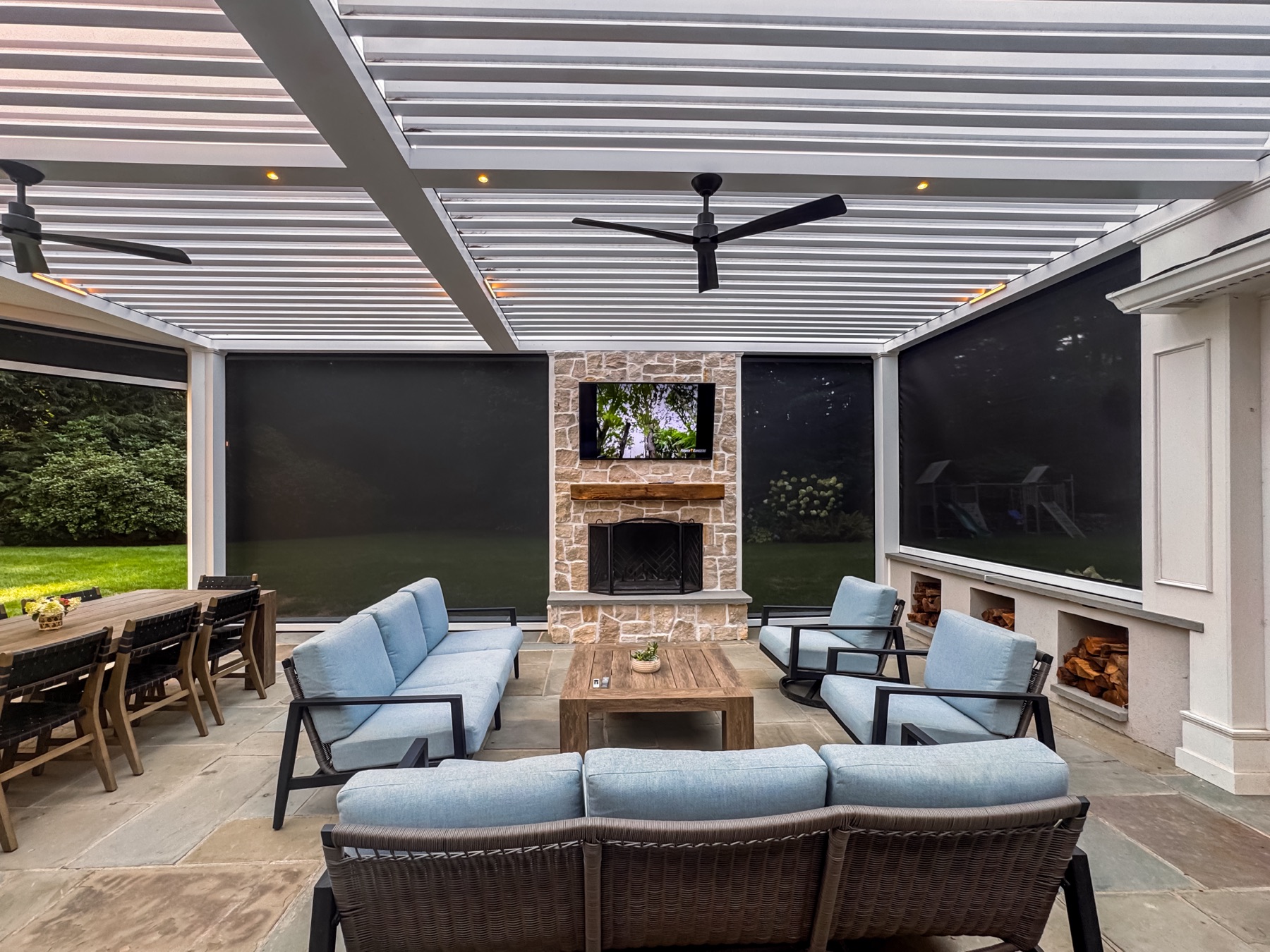
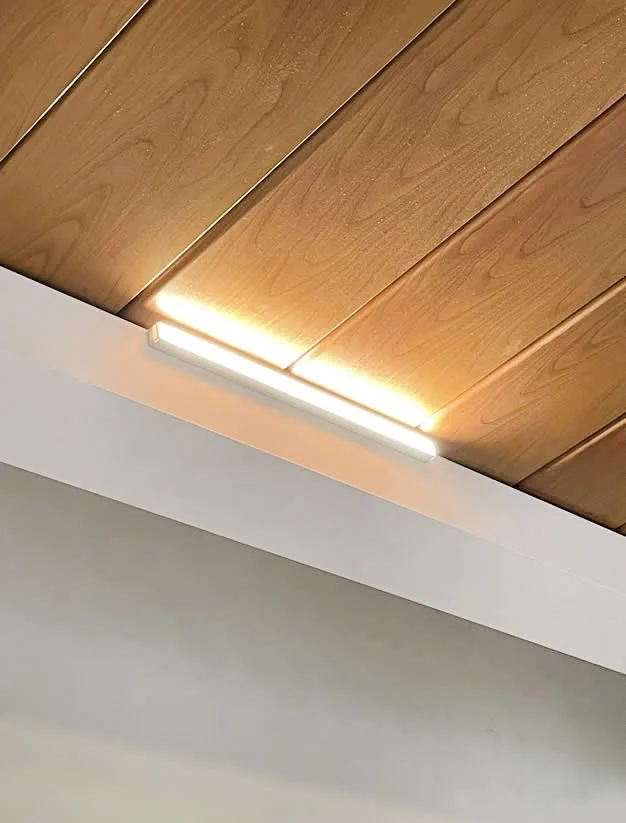
Infrared heat warms people and surfaces directly instead of trying to heat outdoor air. Recessed into the beams, aimed at the seating, on the same control as the roof — this is what a 45° evening needs.
Every one of these is planned with the structure — wired inside the frame, sized to your space, and controlled alongside the roof. That is the difference between an accessory and an afterthought.
Radiant heat warms bodies and surfaces directly, so it works in moving air where a convection heater simply loses its heat to the sky.
Set into the beams and aimed at the seating. Nothing standing on the floor, no propane bottle to swap, nothing to put away.
Electric infrared avoids the propane restrictions that apply in many settings — a real consideration on a terrace or a roof.
On the same app and remote as the louvers, lighting and screens. Heat and screens together is the combination that actually extends the season.
Screens stop the wind carrying the warmth away. Heaters without screens is the most common reason a heated patio still feels cold.
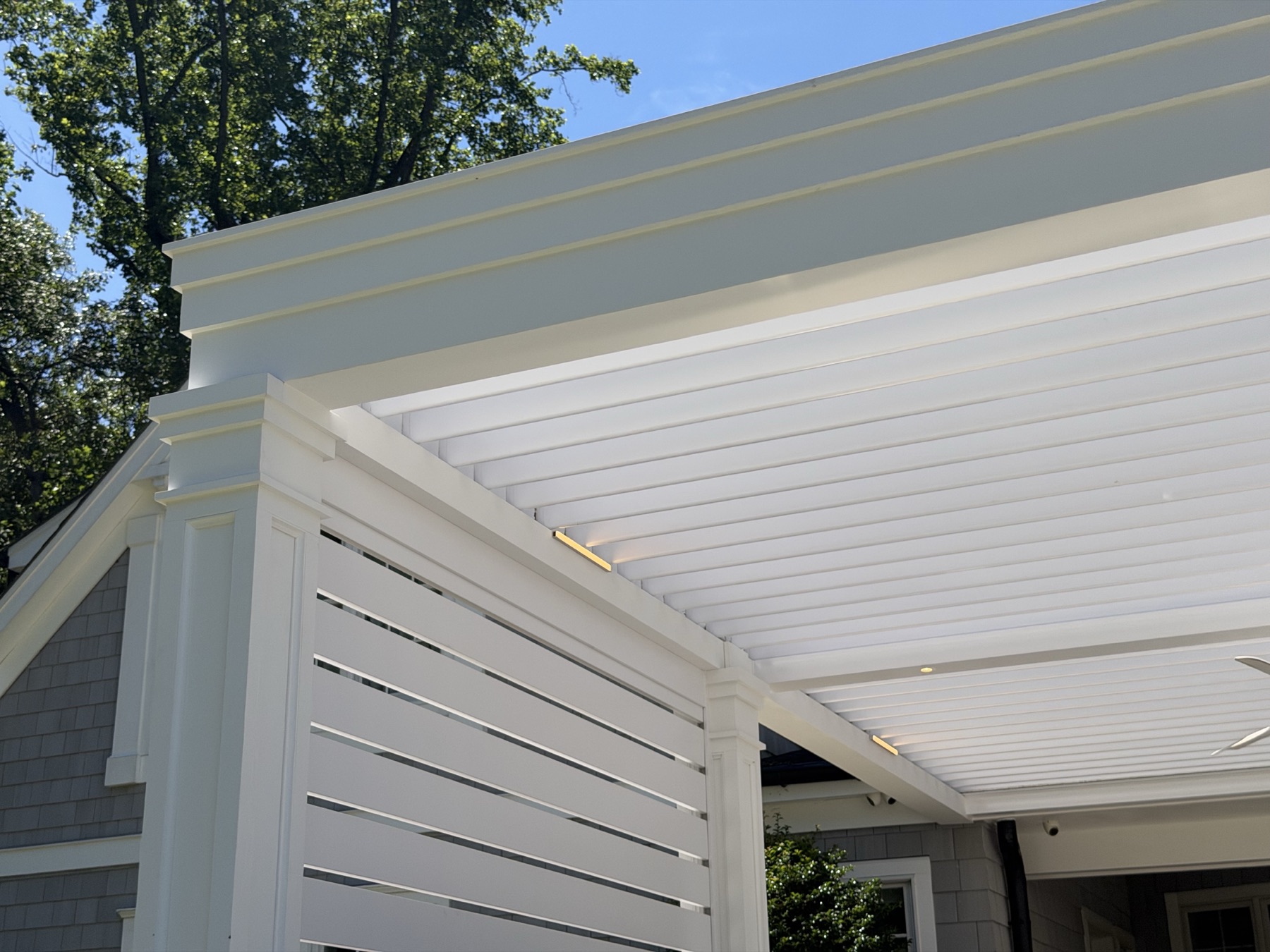
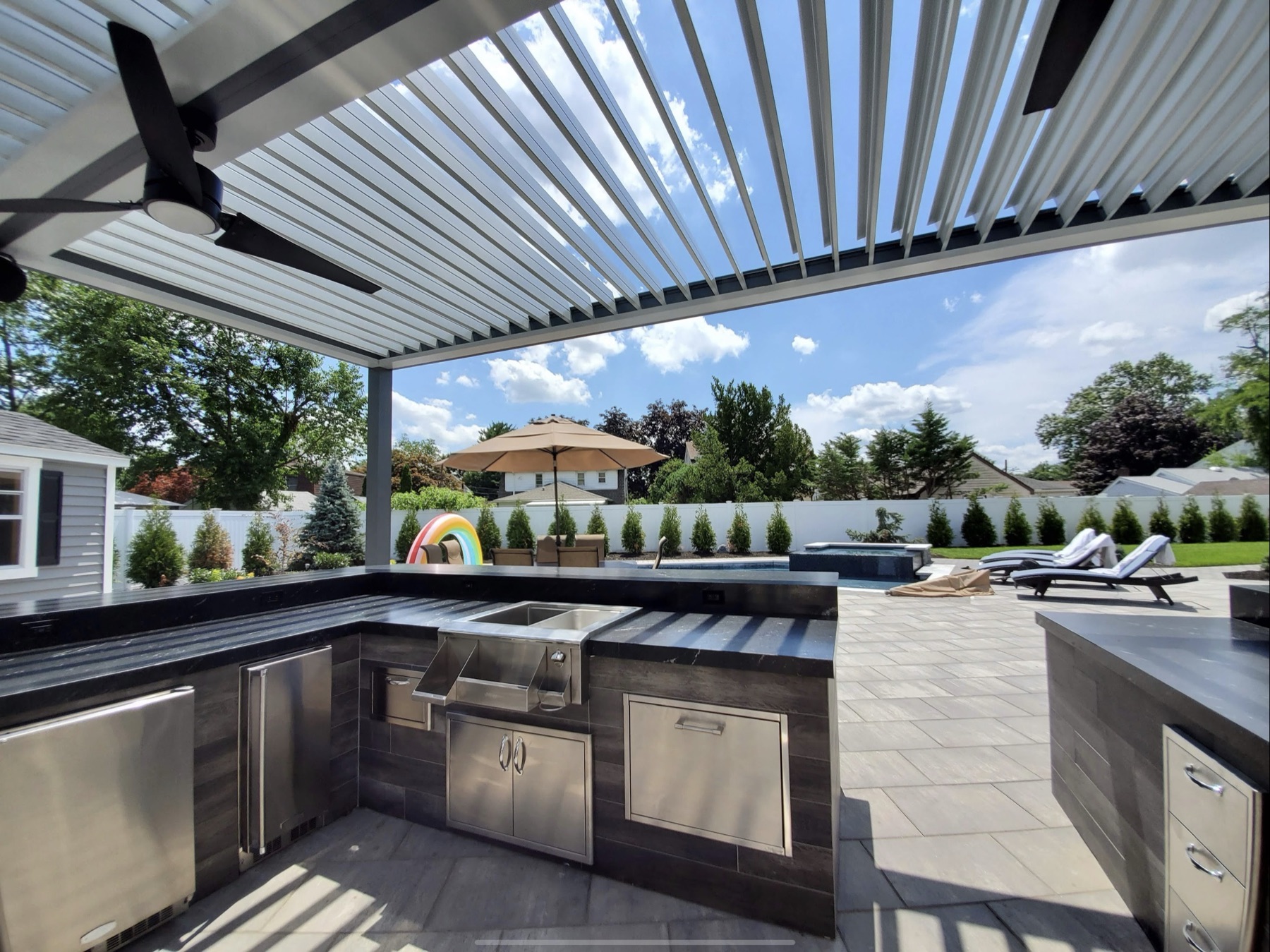
Every photo below is a Breslow installation across New Jersey, New York and Connecticut.


Adding to this page: A close, well-lit shot of a heater running at dusk with the screens down would make this page.
Accessories are priced with the project, not bolted on after.
Size drives the investment first, then attachment to the house, then what you add. The pergola page publishes the full range — from around $65,000 for a 16 × 20 ft system — and exactly what that figure includes. See what it costs and what you get.
A free Zoom consultation first, then photorealistic renderings of the whole room on your actual home — structure, heaters and all — with a fixed-price proposal. Engineering and permitting handled or assisted where required.