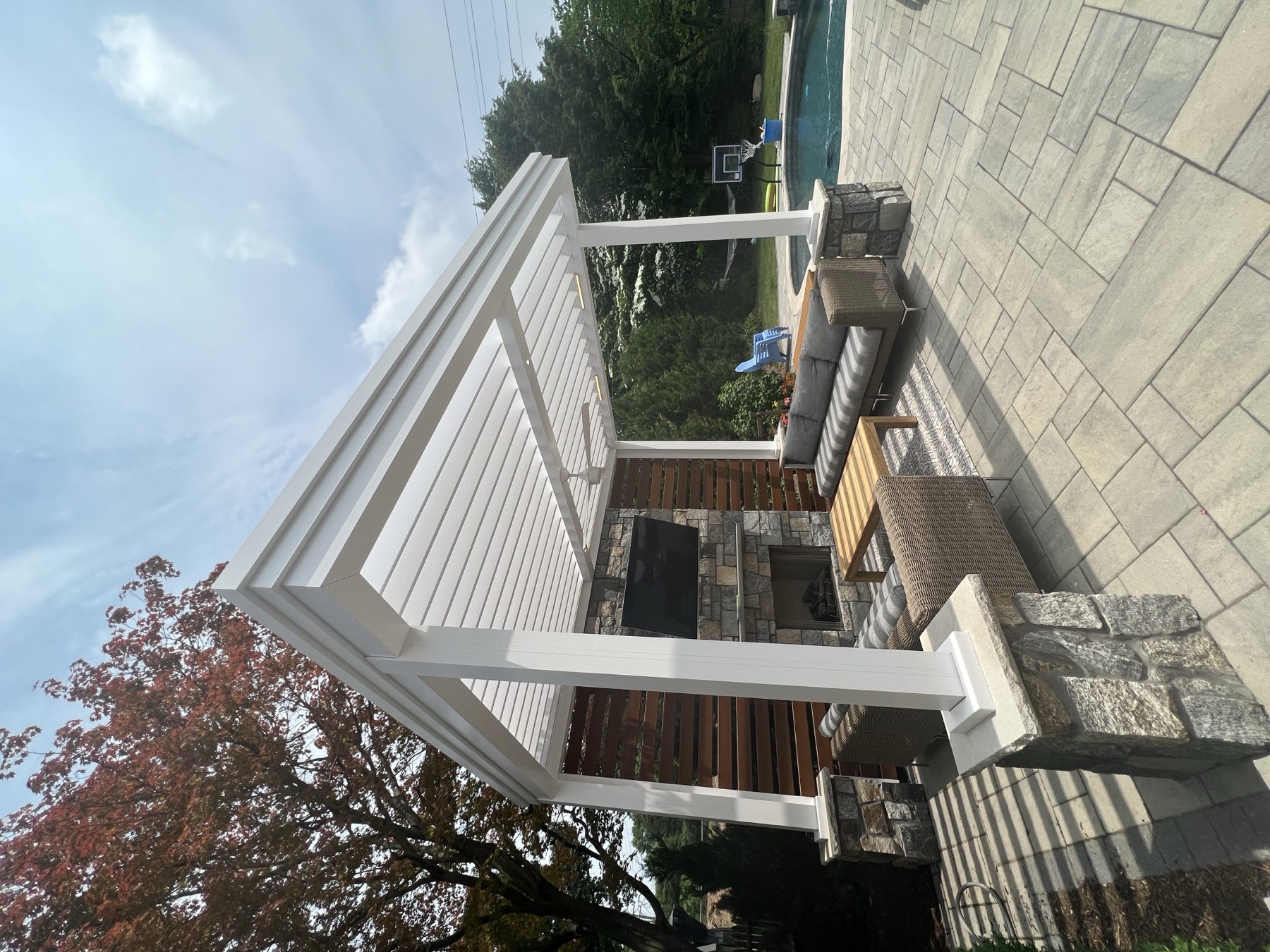
Moving air is what makes a shaded space feel cool, and an outdoor-rated fan mounted into the frame does more for a July afternoon than anything else on this list.
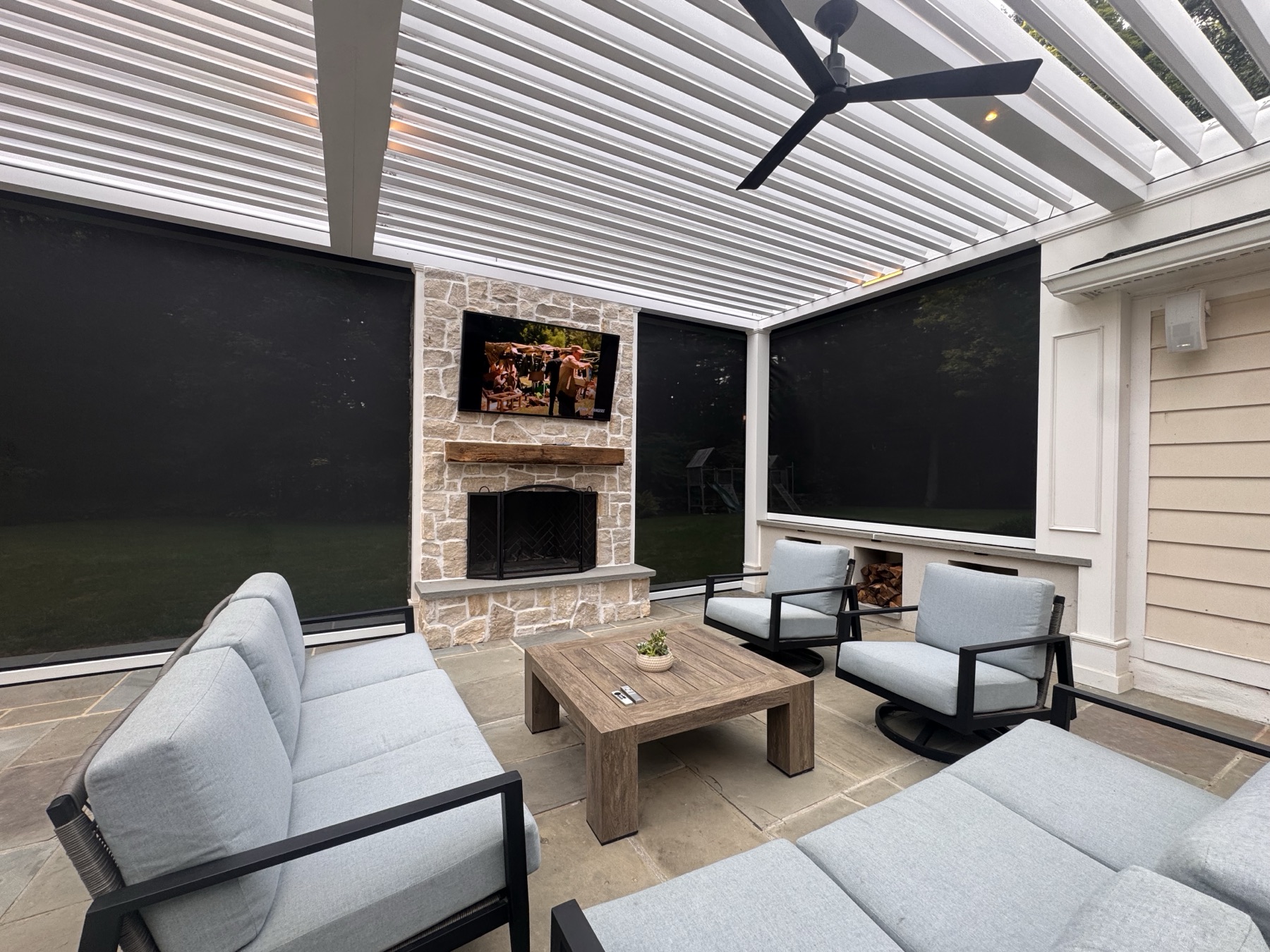
Every one of these is planned with the structure — wired inside the frame, sized to your space, and controlled alongside the roof. That is the difference between an accessory and an afterthought.
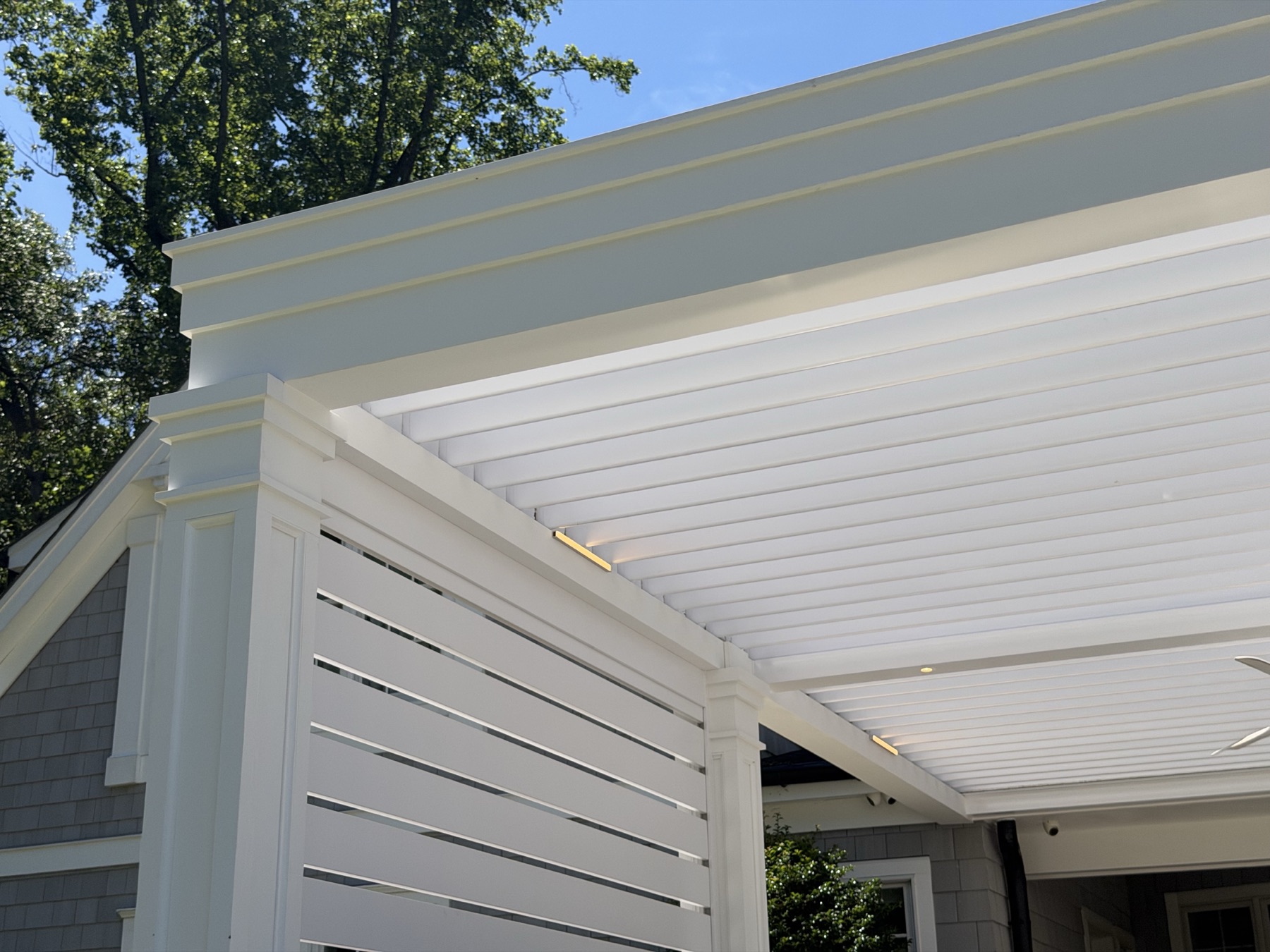
The fan hangs from structural blocking set during the build, wired inside the beam. No drop rod bolted to a louver.
Outdoor-rated motors and blades. An indoor fan under a pergola warps and seizes within a season or two.
Shade stops the sun; moving air is what makes the space feel cool. With the louvers open and a fan running, a covered patio is materially more comfortable than shade alone.
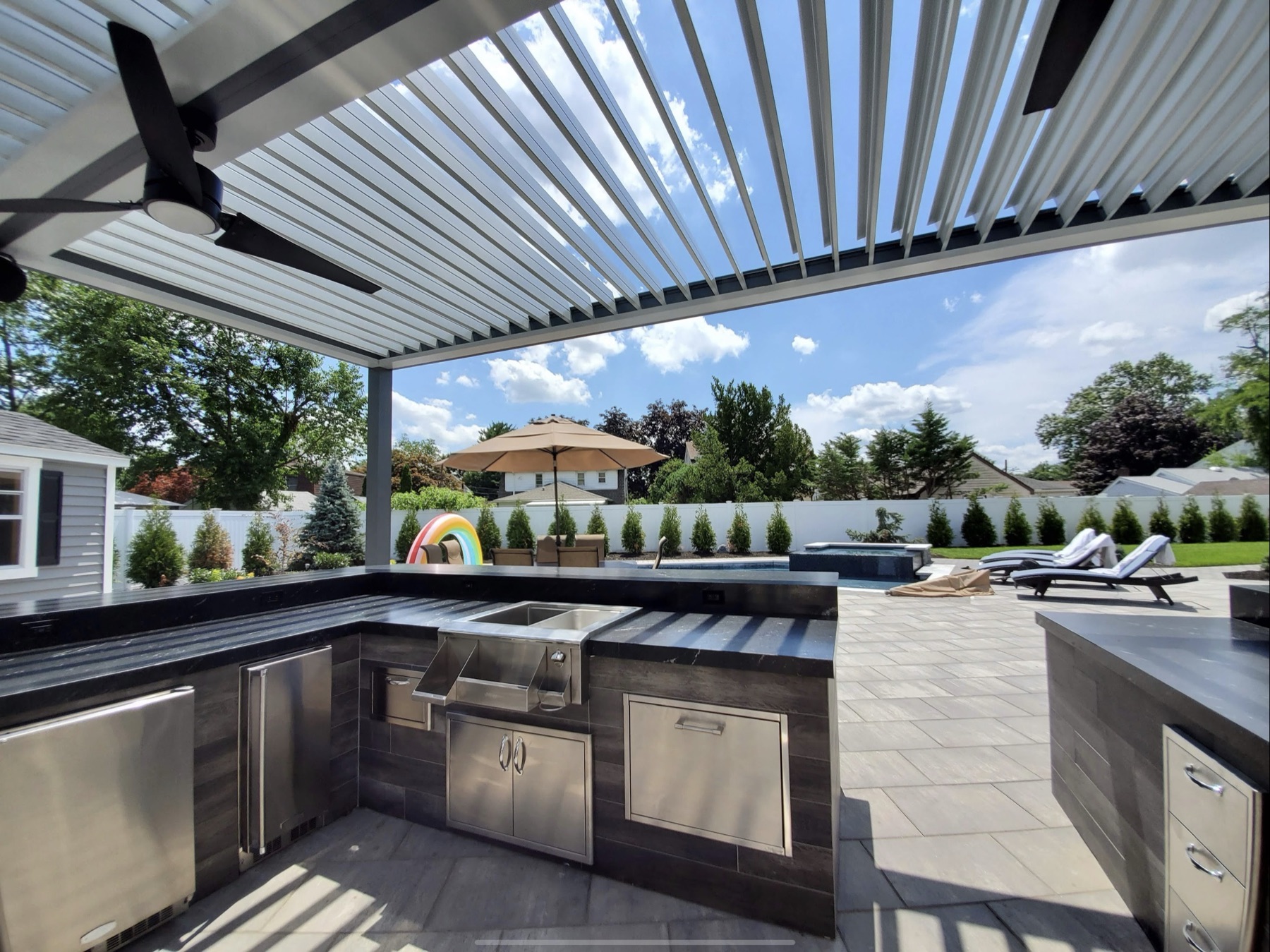
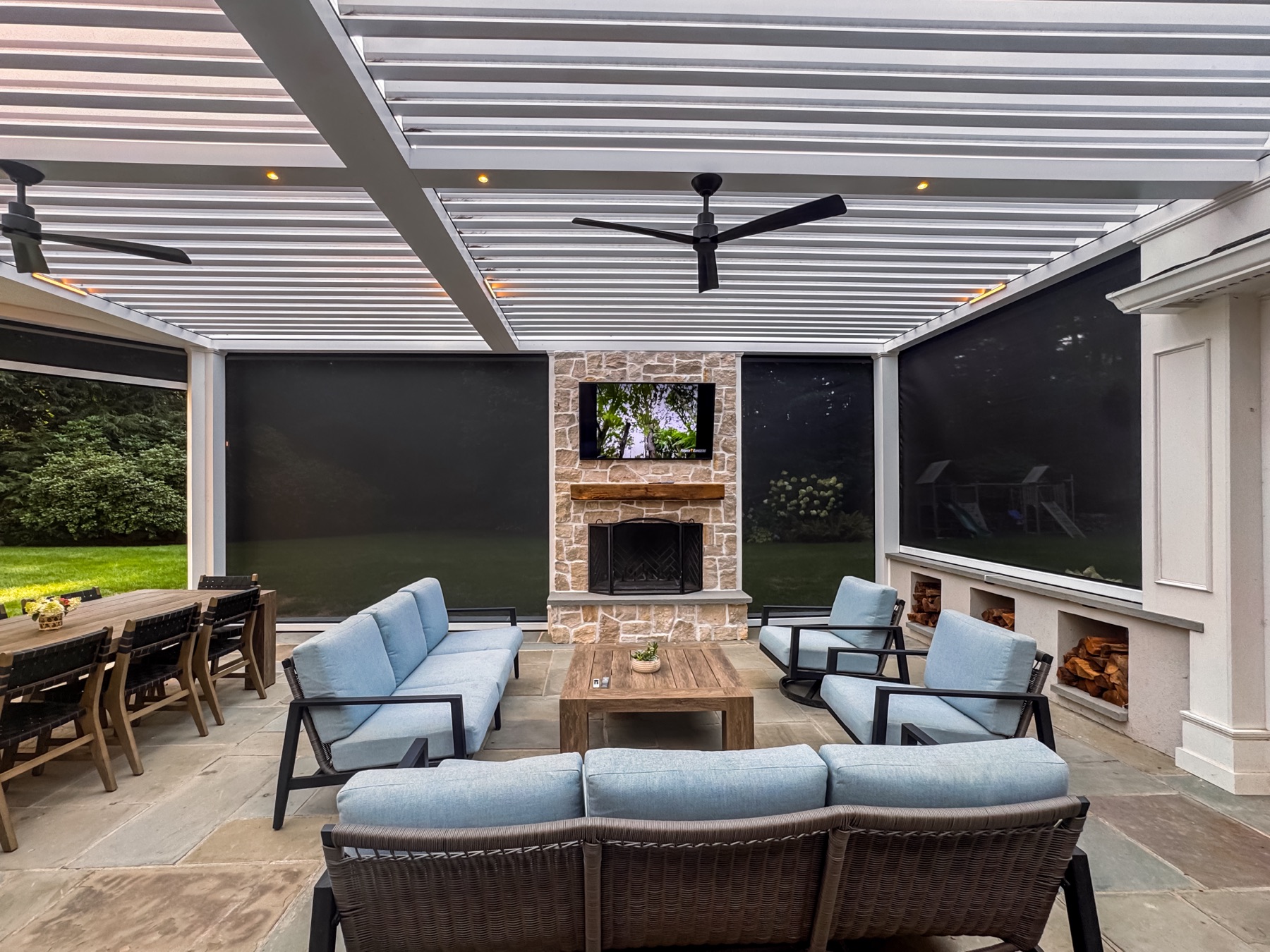
We position fans over the seating and dining zones during design, so the airflow lands where people are and the blades clear the louvers.
Moving air keeps mosquitoes off a table. Not a substitute for screens, but it helps.
Every photo below is a Breslow installation across New Jersey, New York and Connecticut.


Adding to this page: A clean detail shot of a fan mounted between the beams, blades in frame, would strengthen this page.
Accessories are priced with the project, not bolted on after.
Size drives the investment first, then attachment to the house, then what you add. The pergola page publishes the full range — from around $65,000 for a 16 × 20 ft system — and exactly what that figure includes. See what it costs and what you get.
A free Zoom consultation first, then photorealistic renderings of the whole room on your actual home — structure, fans and all — with a fixed-price proposal. Engineering and permitting handled or assisted where required.